When choosing native plants for your landscape or garden, you will want to consider your options carefully. People new native plant gardening are often overwhelmed with the variety and choices among native plants, so it is often helpful to narrow a list of hundreds or thousands of native plants to one that is more specific. Many native plants have very specific growing requirements, constrained by soil properties, drainage, moisture, underlying geology and preference for sun.
The principal Level III ecoregions of North Alabama include the Interior Low Plateaus and Southwestern Appalachians. Believe it or not, these are part of two distinct Level II Ecoregions: the Southeastern Plains and the Ozark, Ouachita-Appalachian Forest! There are numerous sub-divisions of these regions, and the principal ecoregions surrounding Huntsville include the Eastern Highland Rim and Cumberland Plateau Level IV ecoregions. The Cumberland Plateau tends to have more acidic soils with sandstone bedrock that favor a mixed mesophytic forest with lots of acid-loving ericaceous plants (mountain laurel, rhododendrons, azaleas, and blueberries) while the Highland Rim tends to have less acidic limestone-derived soils with extensive karst topography that favors oak-hickory and juniper forests along with cedar glades and barrens (grasslands). These are, of courses, generalizations with many local nuances.
You can read more about these ecoregions and the original dominant plant communities that inhabited them here:
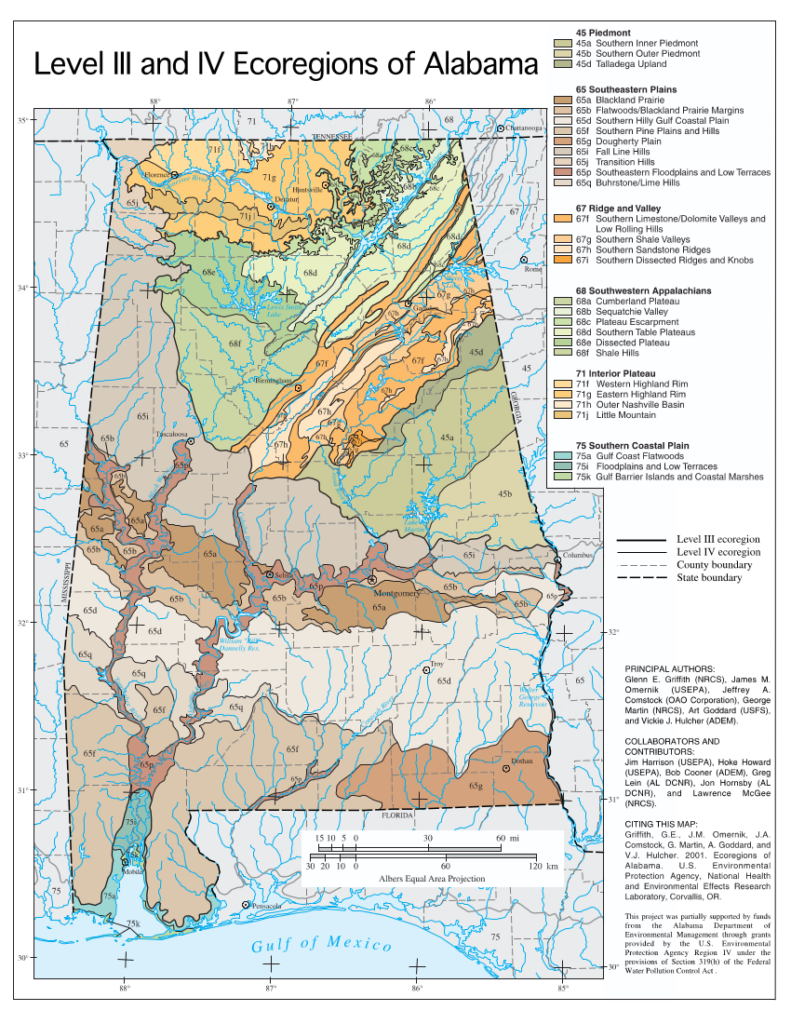
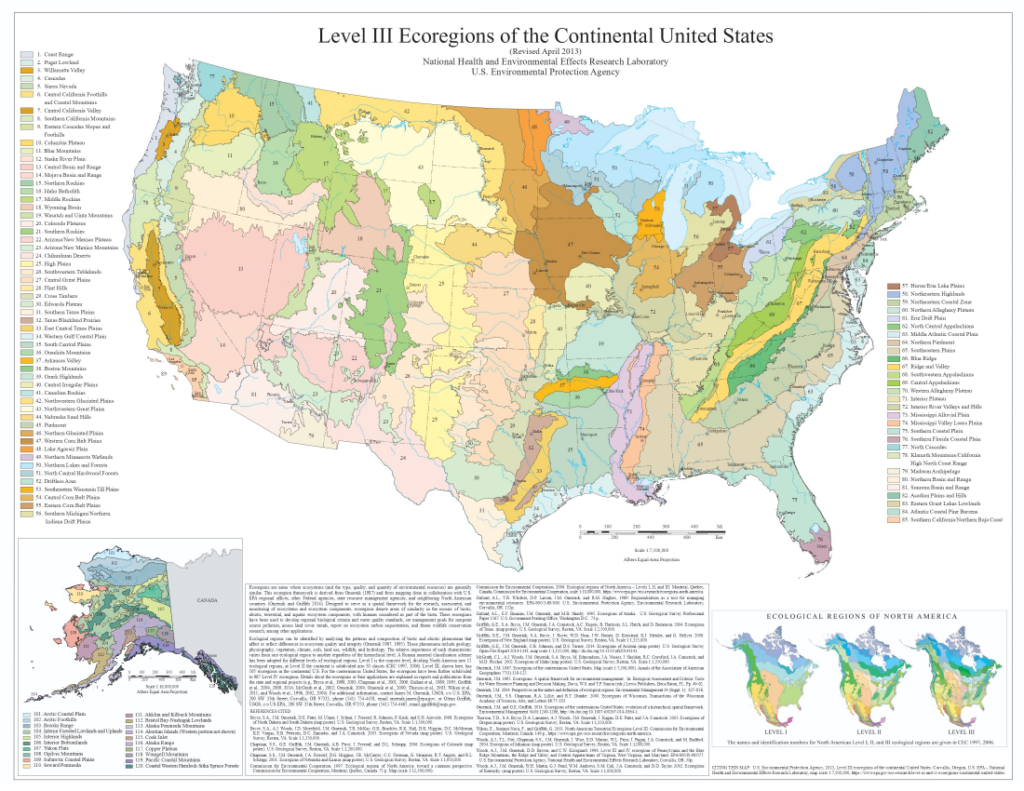
It is important to understand the wider affinities of the Level III Ecoregions. For example, the Interior Low Plateau extends northward through Middle Tennessee and Kentucky into Southern Indiana, Ohio and even Illinois (alluding to its affinities with the grasslands and savannas to the north). The Southwestern Appalachians, including the Cumberland Plateau, extend in a northeastern and southwestern direction into North Central Alabama, Eastern Tennessee & Kentucky. The Level III ecoregions spanning these far-flung states have more in common with each other than the Highland Rim and the Cumberland Plateau have with each other, despite both being adjacent in Huntsville. The diversity of ecoregions in Alabama (as well as its mega-diverse watersheds and role as an ice age refugium) help to explain why Alabama is the #4 state for biodiversity in the U.S.
Now that you are familiar with your ecoregion, it is wise to consider the soil characteristics of your specific property. You can submit a soil sample through Extension, or if you want a general overview of the original soils in your area, you can check out the USDA’s Web Soil Survey. The USDA’s website is old and a little clunky, but here are the instructions for learning about your soil properties:
- Click the “Start WSS” button (green)
- Under the “Quick Navigation” menu on the left, enter your address
- In the Area of Interest Interactive Map, click one of the AOI tracing tools (square or polygon)
- Trace the outline of your neighborhood and double click when you are done
- Click the “Soil Map” tab to see the typical soils in your area
- Click the “Soil Data Explorer” tab and click the properties that interest you (eg pH)
- Enter any required fields, then click “View Rating”
Unfortunately if you live in a new development, your soils may be significantly altered from their original condition. Often what is left is compacted mineral soil that is missing its original organic layer. To repair this soil takes time, but a first priority should be to add organic material back to the soil O-horizon. You can do this with bags and bags of leaves that many residents put at the curbside every fall. Leaves add structure, soil microorganisms, and greatly improve the chemistry and ability for plants to germinate in the organic horizon. Compost is another good option, but it will not be nearly as readily available as leaves will be, nor does it mirror the original soil structure as well as fallen leaves.
Now that you know a little bit about your ecoregion and soils, you may be interested to discover which native plants are naturally found in your ecoregion. These are often the best starting point for planting to support local pollinators and wildlife. I highly recommend bplant to find documented native plants in your ecoregion.
Interior Low Plateau Native Plant List
Southwestern Appalachians Native Plant List
This is all just a starting point for finding the best plants for your native garden. There is no requirement in WONA that you be a native plant purist, but always consider the ecological impact of any decision you make to add plants to your landscape. Start with keystone plant genera that will thrive in your soils, and build the ecosystem back from there! On the other hand, if you are lucky enough to inherit a property with soils that are largely intact, then your first priority should be to remove invasive plants (and keep them out!) and allow the soil seed bank to recover.